


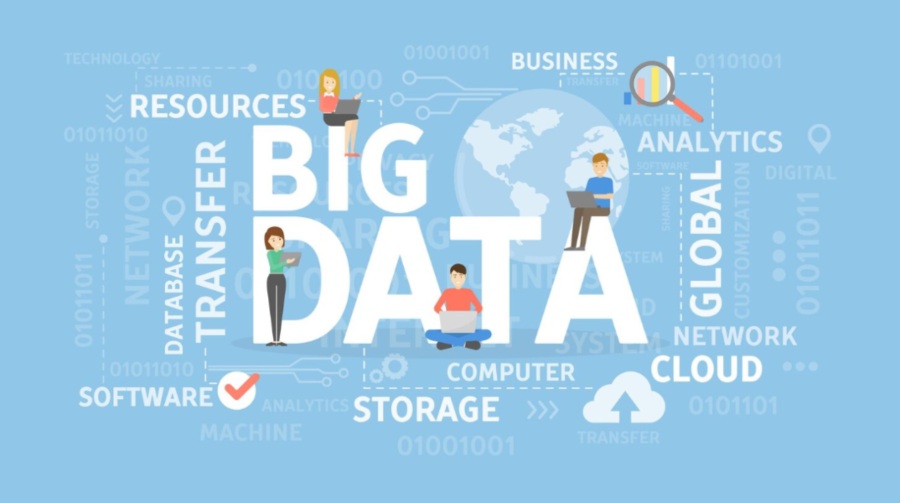
Most companies in 2026 are not struggling to collect data. They are struggling to manage it across dozens of disconnected systems.
Data environments have become far more complex than traditional reporting systems. Customer activity may live inside CRM platforms, operational records inside ERPs, product analytics inside cloud services, while AI systems continuously generate new operational data streams. Without strong coordination, these layers quickly become difficult to manage at scale.
This is why modern big data consulting analytics services are no longer centered only around processing large datasets. Most projects now focus on pipeline orchestration, governance, infrastructure modernization, and building reliable environments for analytics and AI-driven workflows.
In many organizations, the goal is no longer simply “using data.” The focus is increasingly on creating infrastructure where information flows reliably between applications, departments, and automation systems with minimal operational friction.
What defines big data consulting in 2026?
The defining characteristic of big data consulting in 2026 is operational integration.
Organizations no longer treat data as a standalone analytics asset. Data infrastructure now directly affects automation systems, AI agents, forecasting models, customer operations, and internal workflows. Because of this, consulting projects increasingly focus on how data moves between systems rather than where it is stored.
A modern big data solutions company may work across ETL pipelines, cloud warehouses, lakehouse environments, API integrations, real-time event processing, artificial intelligence consulting services, and AI infrastructure within the same project. Governance and observability have also become much more important as organizations attempt to reduce reporting inconsistencies and unreliable AI outputs.
The strongest consulting projects usually focus on long-term operational stability rather than short-term reporting improvements alone.
How has big data consulting evolved with the rise of AI and automation?
The rise of automation has significantly increased the complexity of enterprise data ecosystems.
AI systems continuously generate predictions, recommendations, classifications, and operational outputs that must remain synchronized across multiple business platforms. Maintaining consistency across those environments requires far more coordination than traditional reporting infrastructure.
This is one reason modern big data consulting increasingly focuses on orchestration and reliability engineering. Consulting teams help companies redesign fragmented pipelines, modernize cloud analytics environments, and improve the quality of data feeding AI systems.
In many organizations, poorly coordinated infrastructure now creates larger operational risks than insufficient data collection itself.
What core services do big data consultants provide to modern organizations?
Core structured data consulting services in 2026 typically focus on four major areas: infrastructure modernization, pipeline reliability, governance, and AI readiness.
Infrastructure modernization often includes cloud migration, distributed processing environments, and lakehouse architecture implementation. Pipeline reliability focuses on reducing delays, duplicated records, and inconsistent reporting across operational systems.
Governance work has also become much more important. As enterprise infrastructure becomes more interconnected, governance and observability are becoming much more important for maintaining reliable analytics environments at scale.
Organizations increasingly need stronger access controls, lineage visibility, compliance monitoring, and infrastructure observability across complex data pipelines. At the same time, consulting teams are increasingly expected to prepare environments capable of supporting AI-driven operations continuously across production systems rather than temporary testing environments.
How do companies turn raw data into actionable insights with consulting support?
Analytics systems become far more effective when the underlying data environment is organized consistently.
However, many companies still operate across fragmented infrastructures where customer activity, operational data, cloud analytics, and AI-generated information remain disconnected across multiple platforms. As those environments expand, maintaining reliable reporting becomes increasingly difficult.
Consulting work increasingly starts with infrastructure stabilization. Before companies scale analytics and AI operations, consulting teams typically work on governance coordination, pipeline reliability, and infrastructure stability across distributed environments.
How does big data consulting improve decision-making and business performance?
Reliable decision-making increasingly depends on infrastructure quality rather than analytics tools(e.g., Omni Analytics alternatives) alone.
Many organizations already collect enough operational data to support forecasting and automation at scale. However, inconsistent pipelines and fragmented reporting environments frequently limit how effectively teams can use that information in practice.
This is where big data experts provide value. A large part of modern consulting work involves improving governance, pipeline coordination, and analytics infrastructure.
What challenges do organizations face when implementing big data strategies?
Many organizations discover that scaling modern data infrastructure introduces operational challenges far beyond storage and reporting alone.
Typical challenges include:
- Maintaining consistency across fragmented enterprise systems
- Synchronizing real-time data pipelines reliably at scale
- Managing governance, permissions, and compliance visibility
- Reducing reporting inconsistencies between departments
- Supporting AI-driven analytics with stable operational data
- Monitoring infrastructure performance across distributed environments
- Controlling cloud processing and storage costs efficiently
- Integrating legacy systems with modern analytics platforms
As environments grow, infrastructure coordination often becomes one of the largest operational priorities.
What skills and expertise are essential for big data consultants in 2026?
Modern big data consulting increasingly focuses on how enterprise infrastructure acts at production scale.
Many analytics environments perform reliably during initial deployment but become harder to maintain once real-time processing, AI workloads, automated workflows, and distributed business operations begin scaling simultaneously.
This is one reason consulting teams now prioritize infrastructure reliability, governance, observability, and orchestration much earlier in implementation processes. Long-term operational stability has become just as important as analytics performance itself.
For many organizations, maintaining long-term stability across distributed systems has become just as important as generating analytics insights themselves.
Core realities of big data consulting in 2026
- Most enterprise challenges now involve infrastructure coordination rather than data collection itself.
- AI-driven operations require far more reliable and continuously updated pipelines.
- Fragmented systems remain one of the biggest barriers to scalable analytics.
- Governance and observability have become operational priorities rather than secondary features.
- Real-time processing environments are replacing delayed reporting cycles in many industries.
- Infrastructure reliability increasingly affects forecasting accuracy and automation performance directly.
- Today’s consulting projects often extend beyond analytics alone and involve coordinating cloud platforms, distributed infrastructure, and AI-driven systems simultaneously.
- Long-term operational stability and scalability increasingly play a larger role in project success than short-term analytics functionality by itself.
Leave a Reply