


Modern warehouses, factories, and food processing plants need faster, safer, and more reliable ways to move materials. This is where AI and advanced conveyor systems work together. Companies such as Wire Belt Company help businesses improve material handling through specialized metal conveyor belts for food processing and industrial applications. Their support includes custom belt design, manufacturing, installation, belt surveys, technical support, training, maintenance tools, and solutions that help reduce downtime and extend equipment life.
So, How Does AI Optimize Material Handling Systems? AI improves material handling by using data, sensors, robotics, computer vision, and machine learning to make movement smarter. It helps products move through warehouses and production lines with fewer delays, fewer errors, and better control.
Metal conveyor belt systems are also important because they provide strength, hygiene, airflow, drainage, and durability in demanding environments. When these systems are combined with AI, businesses can improve speed, reduce breakdowns, and create more flexible operations.
AI Optimization for Material Handling Systems in Modern Facilities
AI optimizes material handling systems by turning daily operations into useful data. Every conveyor movement, product scan, machine signal, robot route, and inventory update creates information. AI studies this information to find better ways to move products through a facility.
In traditional systems, many tasks depend on fixed routes and manual decisions. AI makes the process more flexible. It can adjust product flow, change routes, detect bottlenecks, and help managers make faster decisions.
For example, if one conveyor line becomes overloaded, AI can help redirect products to another area. If a machine shows signs of stress, AI can alert the maintenance team before the system stops. This helps reduce downtime and keeps production moving.
Metal conveyor belt systems make this even stronger. A wire mesh conveyor belt provides a reliable base for food processing, packaging, cooling, frying, drying, freezing, and industrial handling. When AI is integrated, these belts can become part of a smarter material-movement system.
How Does AI Optimize Material Handling Systems? It does this by improving speed, accuracy, safety, maintenance, and inventory control simultaneously.
Metal Conveyor Belt Systems for Efficient Material Handling
Metal conveyor belt systems play an important role in efficient material handling by providing strength, durability, and reliable product movement in demanding environments. From food processing to industrial production, these systems help move materials smoothly, reduce downtime, improve hygiene, and support faster workflows. With the right conveyor design, businesses can handle products more safely, maintain consistent operations, and improve overall productivity.
They Handle Demanding Applications
Metal conveyor belts are useful in environments where standard belts may not perform well. They can handle heat, moisture, heavy products, airflow needs, drainage, and constant production demands.
They Support Food Processing
Food processing facilities often need belts that are strong, cleanable, and suitable for washing, cooling, frying, baking, or freezing. Metal belts can support these needs while keeping products moving smoothly.
They Reduce Downtime
A strong conveyor belt system can reduce production stops. With proper surveys, maintenance tools, training, and technical support, businesses can catch problems early and keep equipment running longer.
They Improve Automation Performance
AI, robotics, and vision systems work better when products move in a stable and predictable way. Metal conveyor belts help create that reliable movement, making automation more accurate.
Robotics, Sorting, and Picking Improvements in Smart Material Handling
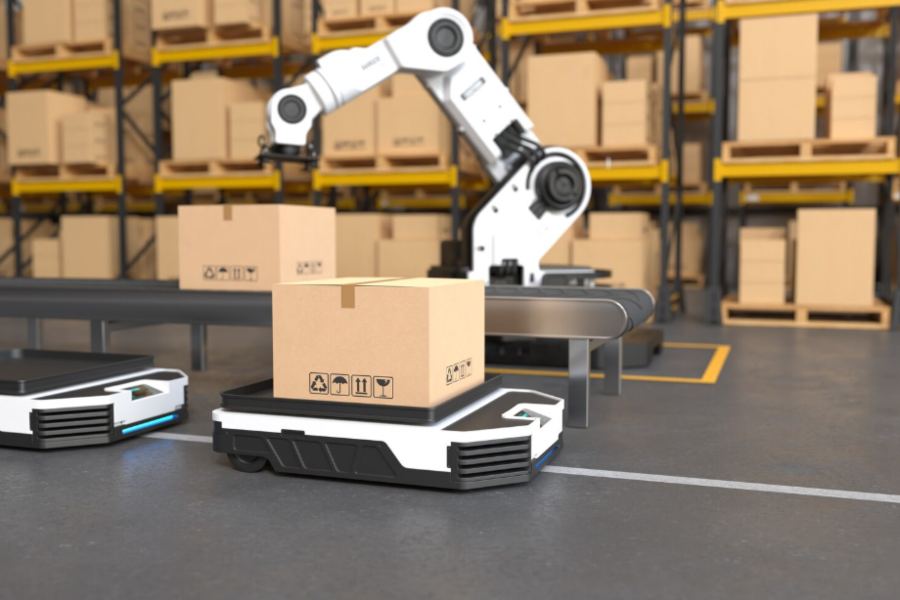
AI improves robotics by helping machines understand their surroundings and make smarter decisions. Autonomous mobile robots can move materials without fixed paths. Robotic arms can pick, sort, and place products with better accuracy. Computer vision can identify products by size, shape, label, or position.
- Autonomous robots move goods across warehouses and avoid obstacles.
- Robotic arms support picking, packing, and product handling.
- AI sorting systems send items to the correct destination faster.
- Computer vision checks product position, quality, and labels.
- Smart conveyors help products arrive at the right place at the right time.
How Does AI Optimize Material Handling Systems? It connects robots, conveyors, sensors, and software so that the whole process works together rather than separately.
Predictive Maintenance for Reducing Downtime in Material Handling Systems
Predictive maintenance is one of the biggest benefits of AI in material handling. Conveyor systems, motors, rollers, bearings, sprockets, and belts can wear down over time. If a business waits until equipment fails, it may face expensive repairs and production delays.
AI helps by monitoring equipment health. Sensors can track vibration, temperature, belt speed, motor load, and unusual movement. AI studies these signals and warns teams when a part may need attention.
This is especially helpful for metal conveyor belt systems used in food processing and industrial operations. These systems often run for long hours and may work in hot, wet, cold, or heavy-duty environments. AI helps maintenance teams act before small issues become major failures.
With AI, companies can plan repairs, order spare parts earlier, reduce emergency shutdowns, and extend equipment life. This saves money and improves production reliability.
Inventory, Safety, and Workflow Improvements with Smart AI Systems
Inventory, safety, and workflow management become easier when businesses use smart AI systems. AI helps track stock in real time, detect safety risks, reduce human errors, and improve task planning across warehouses and production facilities. By analyzing data from sensors, cameras, equipment, and inventory tools, AI supports faster decisions, safer operations, and smoother material handling from start to finish.
AI Improves Inventory Accuracy
AI can track stock movement in real time. It helps businesses know where their products are, how much inventory is available, and when items need to be replenished.
AI Improves Worker Safety
AI-powered cameras and sensors can detect unsafe forklift movement, blocked aisles, workers near dangerous machines, or product jams on conveyor lines.
AI Improves Workflow Planning
AI can study order volume, production schedules, and material movement. It helps managers plan better routes, assign tasks, and reduce wasted time. To turn these insights into action and coordinate facility staff effectively, managers often rely on AI project management tools like Lark. Lark offers flexible project views like Gantt, calendar, and Kanban, plus AI-driven automation to eliminate repetitive tasks and help teams work more efficiently.
AI Reduces Human Error
AI supports barcode scanning, vision inspection, automated sorting, and real-time alerts. This reduces wrong picks, misplaced items, and shipping mistakes.
AI Supports Better Decision-Making
Managers can use AI insights to understand bottlenecks, maintenance risks, slow areas, and labor needs. This helps them improve operations with real data. Similar AI-driven technology is also transforming vehicle transportation, making it easier for businesses and individuals to choose the best car shipping company for more efficient scheduling, shipment tracking, and delivery management.
Conclusion
How Does AI Optimize Material Handling Systems? AI makes material handling smarter by improving conveyor performance, robotics, inventory tracking, equipment maintenance, sorting, safety, and workflow planning. It helps businesses move products faster while reducing downtime and errors.
Metal conveyor belt systems are still a key part of this progress. They provide the strength, hygiene, and reliability needed in food processing and industrial applications. When combined with AI, they help businesses create faster, safer, and more efficient material handling systems.
The future of material handling is not only about automation. It is about combining strong equipment, smart data, skilled workers, and reliable support to build better operations.
FAQ’s
How Does AI Optimize Material Handling Systems?
AI optimizes material handling systems by using data, sensors, robotics, and machine learning to improve product movement, maintenance, inventory accuracy, safety, and workflow.
Why are metal conveyor belts important?
Metal conveyor belts are important because they are strong, durable, easy to clean, and suitable for demanding food-processing and industrial applications.
How does AI reduce conveyor downtime?
AI reduces downtime by monitoring equipment health and warning teams before motors, belts, bearings, or other parts fail.
Can AI improve sorting and picking?
Yes. AI improves sorting and picking through robotics, computer vision, barcode scanning, and smart routing systems.
Is AI useful for food processing and material handling?
Yes. AI helps food processors improve product flow, quality inspection, equipment maintenance, safety, and production efficiency.
Leave a Reply