


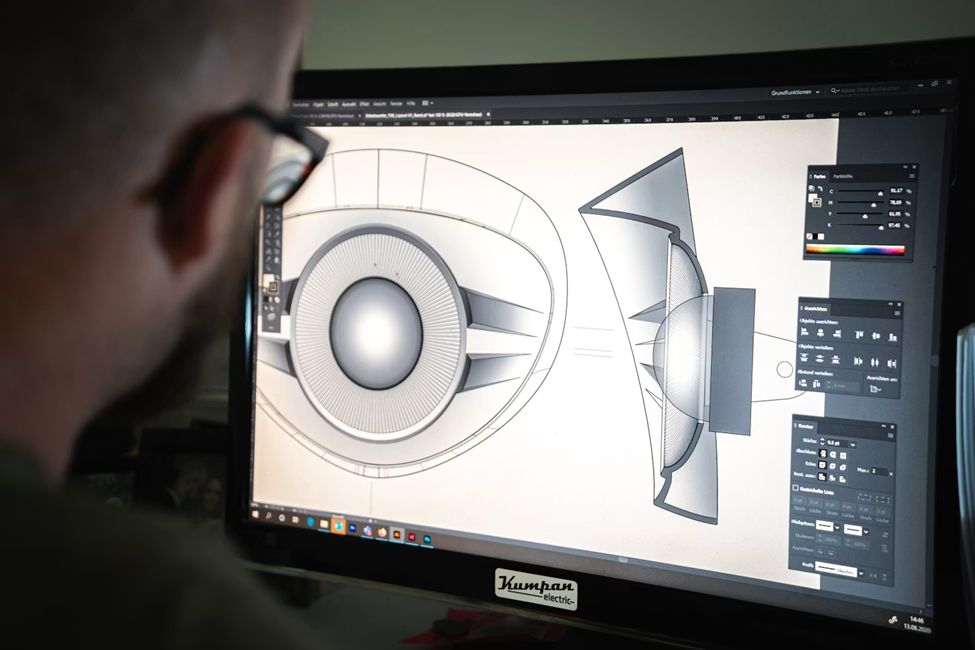
Product decisions once had to wait for dedicated tooling or a finished build. Until teams could hold a physical part or use an interactive version, discussions remained tied to specifications, renders, and assumptions.
That sequence has changed as physical and digital teams have moved prototyping earlier in product development. With options available at different fidelity levels, teams must decide when another version is useful and when it delays commitment. What does rapid prototyping offer a design team, and where does it stop paying off?
What Rapid Prototyping Looks Like in Practice
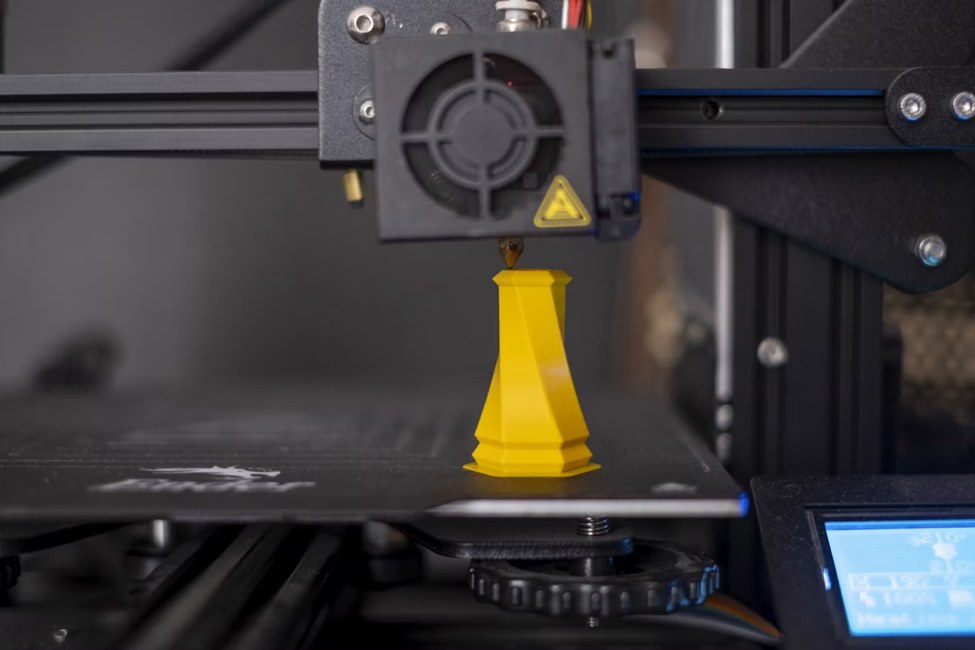
Rapid prototyping turns a CAD file into a physical or interactive artifact within hours or days rather than weeks, without cutting tooling first. In physical product development, 3D printing builds a part directly from that file.
Consider a handheld device enclosure. The team produces a Stereolithography (SLA) part, checks its form, fit, and function, revises the wall thickness in CAD, and holds the updated enclosure two days later.
Different processes support different questions. Fused Deposition Modeling (FDM) provides inexpensive geometry checks, while SLA and PolyJet add surface detail. Selective Laser Sintering (SLS) and Multi Jet Fusion (MJF) create durable functional parts, while Direct Metal Laser Sintering (DMLS) produces metal components. CNC machining is suitable when material properties must closely match production.
Across these routes, prototype fidelity forms a ladder rather than a switch. Low fidelity tests whether the idea is right, medium fidelity refines its use, and high fidelity asks whether the design will survive testing.
Where the Time and Money Savings Come From
The largest schedule savings do not come from a printer moving quickly. Instead, they come from skipping tooling during early design iteration, when geometry is changing and decisions carry uncertainty.
A soft tool or steel injection mold can consume weeks and require a five-figure commitment before anyone holds a representative part. Later feature changes can mean welding, recutting, or replacing the tool.
Rapid prototyping moves proof of concept ahead of that commitment. Engineers can examine several versions while changes remain CAD edits rather than modifications to expensive production equipment.
Iteration count is a more useful measure of speed. A team completing five focused iterations instead of one has five chances to find interference, weak geometry, poor access, or assembly trouble.
The cost of change rises at each development stage. An incorrect wall thickness costs little to revise before design validation, but becomes expensive once tooling, supplier orders, packaging, and assembly planning depend on it.
Accordingly, the schedule becomes less linear. Engineering can update one area while testing another instead of placing every task behind a mold-making queue.
Upstream work has also accelerated, with AI-powered design workflows helping teams explore concepts before committing engineering time. Physical evidence still determines whether those concepts work outside the screen.
Sourcing also affects turnaround. Teams may run desktop FDM printers in-house, book a shared shop, or use a service bureau, where SLA and CNC parts quoted at Yijin Solution and by similar suppliers typically ship within a few working days.
Timing depends on geometry, material availability, finish, and inspection requirements. A basic functional prototype usually moves faster than a painted presentation model or machined assembly with tightly controlled dimensions.
The approach can continue after validation. Printed or machined bridge parts support low-volume production and early customer orders while the final injection molding tool is cut, shortening time to market without freezing development prematurely.
Prototypes Give Teams a Shared Reference Point
A CAD render invites opinions about what a product might be like. A functional prototype forces decisions about what it is because dimensions, controls, interfaces, and physical constraints are no longer abstract.
For a handheld product, a drawing can confirm dimensions but not comfort. A physical part reveals grip pressure, thumb reach, button travel, balance, and whether its apparent weight matches the experience of holding it.
As in previous stages, fidelity should follow the unresolved question. A low-fidelity shell exposes proportion problems, while a medium-fidelity assembly tests handling and access. A high-fidelity build supports demanding validation under realistic conditions.
Digital product development follows the same progression. Teams move from wireframes to clickable mockups and native builds, increasing fidelity as questions shift from layout to behavior and technical performance.
During interactive prototype testing, watching a user miss a control provides clearer evidence than a stakeholder’s preference. The failure shows where the interface conflicts with user expectations, just as an awkward control exposes a hardware problem.
Shared evidence improves more than communication. Manufacturing can assess assembly access, marketing can verify visible features, and leadership can approve the same artifact rather than interpret separate specifications, renders, and presentations.
That alignment protects the schedule. A disagreement found around a prototype leads to another controlled iteration. After tooling approval, the same disagreement can reset procurement, packaging, documentation, and launch planning.
Teams must also read results correctly, separating design failures from those caused by unrealistic loads, poor test fixtures, or unrepresentative prototype materials.
What Rapid Prototyping Will Not Do for You
Rapid prototyping does not replace production economics. Printed-part costs remain relatively flat as quantity rises, while injection molding spreads tooling expenses across the production run and lowers each additional part’s cost.
The crossover often appears somewhere in the hundreds of units, although geometry, material, finish, and mold complexity shift that point. Beyond it, printing every unit can cost more than production tooling.
This boundary matters because the least expensive prototype route is not necessarily the least expensive production route. Rapid methods reduce uncertainty before volume production, but do not automatically become the cheapest option at every quantity.
Low-volume production can extend the useful window, especially when tooling remains unfinished or demand is uncertain. Once repeat demand justifies a mold, continued printing becomes an expensive production habit.
Process capability creates another boundary. A prototype can prove shape, assembly order, access, and user interaction while providing an incomplete picture of long-term material behavior or mass-production consistency.
Prototype Grade Is Not Production Grade
Printed resins and nylons do not automatically match the strength, heat resistance, or UV stability of the intended production polymer. An SLA enclosure that passes one drop test may perform differently after repeated impacts or outdoor exposure.
Tolerances and surface finishes also vary by process. Cosmetic approval often requires sanding, coating, vapor smoothing, or CNC machining in the specified material before color, texture, gaps, and mating features can receive meaningful sign-off.
Design for Manufacturability (DFM) connects prototype learning to injection molding. Draft angles, uniform wall thickness, parting lines, and gate locations must enter the CAD model before the geometry becomes a tooling commitment.
Knowing When to Stop Iterating
More design iteration is not always better. Each prototype needs a defined question, acceptance criterion, and test method. Otherwise, teams produce slightly different parts without reducing meaningful risk.
The practical stop signal appears when revisions no longer change geometry, assembly, or operation and affect only the finish. The remaining questions then belong to tooling trials and production qualification, not another print.
Choosing What to Prototype and What to Commit
The benefit of rapid prototyping is the opportunity to be wrong early, cheaply, and with enough evidence to correct the product before expensive commitments accumulate.
Effective product development matches fidelity to the current question. Teams should use the simplest artifact that produces a reliable answer, increasing realism only when the next decision demands it.
Once a prototype stops generating new information, another iteration adds motion rather than progress. At that point, teams can carry validated geometry into DFM, tooling, and production while directing remaining questions to the processes designed to answer them.
Leave a Reply