


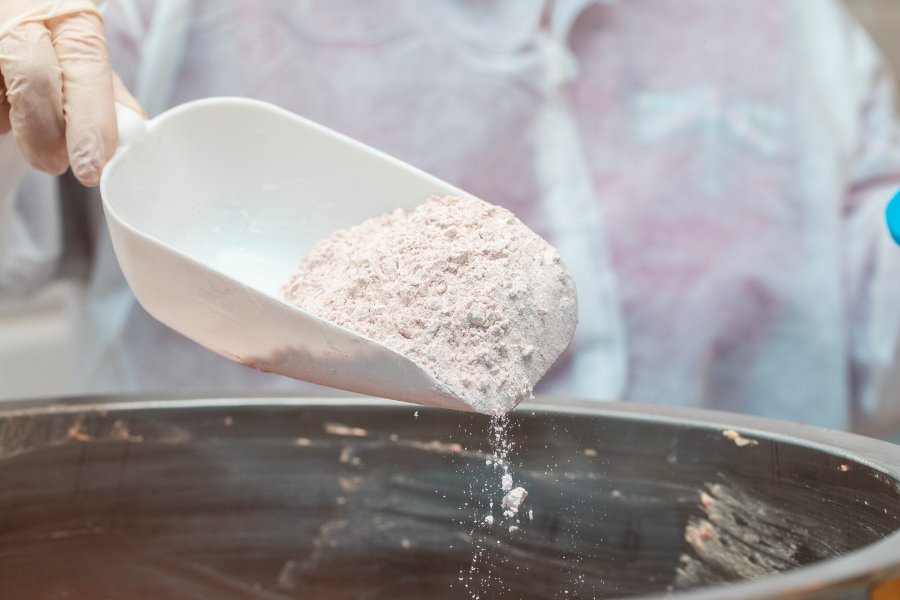
Hafnium oxide (HfO₂), also known as hafnia, is an advanced inorganic material valued for its electrical, thermal, optical, and chemical properties. Although hafnium is not widely known outside specialized industries, its oxide has become increasingly important in modern manufacturing and high-performance technologies. Hafnium oxide is particularly useful where manufacturers require reliable performance under demanding operating conditions.
The material is especially significant in semiconductor manufacturing, where its high dielectric constant makes it a useful high-k dielectric. As electronic components become smaller, manufacturers need insulating materials that can maintain electrical performance without creating excessive leakage. Hafnium oxide helps address this challenge while supporting the continued development of compact and efficient electronic devices.
However, semiconductor devices are not the only area where HfO₂ has value. Hafnium oxide is used in manufacturing for optical coatings, advanced ceramics, refractory materials, catalyst-related applications, and selected biomedical technologies. Its combination of thermal stability, chemical resistance, dielectric performance, and optical characteristics allows manufacturers to consider it for a wide range of specialized applications.
Understanding its properties, manufacturing methods, and industrial applications helps explain why this material continues to attract attention across advanced manufacturing sectors.
What Makes Hafnium Oxide Useful in Manufacturing?
Hafnium oxide combines several characteristics that make it suitable for demanding applications. It has a relatively high dielectric constant, strong thermal stability, chemical resistance, a high melting point, and a high refractive index.
Its dielectric constant is commonly described in the range of approximately 20–25, significantly higher than silicon dioxide, which has a dielectric constant of about 3.9. This property makes HfO₂ particularly useful when manufacturers need effective electrical insulation in very small device structures.
Hafnium oxide also has a high melting point of around 2,800°C. This allows it to remain stable in applications involving significant thermal stress. Its chemical resistance provides another advantage when materials must operate in challenging environments.
The compound can exist in different crystal phases, including monoclinic, tetragonal, and cubic structures. These structures have different properties, so controlling crystal phase can be important for specialized applications.
How Is Hafnium Oxide Used in Semiconductor Manufacturing?
One of the most important applications of HfO₂ is in the semiconductor industry. Modern processors and integrated circuits require extremely thin insulating layers, and traditional silicon dioxide becomes increasingly difficult to use as device dimensions shrink.
Hafnium oxide can serve as a high-k dielectric in MOSFET structures. Its higher dielectric constant allows manufacturers to achieve suitable electrical characteristics while using a physically thicker insulating layer than would be required with a lower-k material.
This helps address leakage-current problems associated with very thin conventional dielectric layers.
Why Is HfO₂ Important for High-k Dielectrics?
The high dielectric constant of hafnium oxide lets it store electrical charge effectively while remaining insulating. This combination makes it valuable for advanced transistor designs.
As semiconductor manufacturers continue to develop smaller and more powerful devices, controlling leakage and power consumption becomes increasingly important. HfO₂ provides a material option that supports these requirements.
Specialized manufacturing techniques can deposit hafnium oxide thin films, allowing precise control over the material’s thickness and characteristics.
What Are the Optical Applications of Hafnium Oxide?
Optical manufacturing is another key application of HfO₂. Its relatively high refractive index makes it useful for controlling how light interacts with a surface.
Hafnium oxide can be used in optical coatings, including reflective films, anti-reflective coatings, and optical filters. By controlling the thickness and arrangement of thin layers, manufacturers can produce coatings with specific reflection and transmission characteristics.
These properties also make HfO₂ relevant to certain laser-related applications. It can serve as a high-index material in multilayer optical structures designed for precision light control.
Therefore, hafnium oxide’s uses in manufacturing extend beyond electronics into optical systems where durability and predictable optical performance matter.
How Does Hafnium Oxide Support Advanced Ceramics?
Hafnium oxide can also contribute to advanced ceramic materials. Its high melting point and thermal stability make it useful when ceramic components must tolerate demanding temperatures.
The source material identifies potential applications in cutting tools, abrasives, and refractory materials. In these applications, HfO₂ can contribute hardness, toughness, and high-temperature resistance.
However, its performance depends on the complete ceramic formulation. Manufacturers need to consider how hafnium oxide interacts with other materials and how processing conditions affect the final structure.
Hafnium Oxide in Refractory Materials
Refractory materials must maintain their structural integrity under very high temperatures. Because HfO₂ has a high melting point, it can be considered for specialized refractory formulations that require extreme thermal resistance.
The material’s relatively high cost means manufacturers must balance its performance advantages against production economics and the final application’s requirements.
Can Hafnium Oxide Be Used in Catalysts?
Hafnium oxide also has potential uses in catalyst-related manufacturing. The supplied source identifies HfO₂ as a catalyst or catalyst support in certain petrochemical processes, including hydrogenation and cracking.
Catalytic applications require careful control of surface properties, chemical stability, and particle characteristics. HfO₂ can be useful when these properties fit the requirements of a particular chemical process.
Its role may vary depending on whether it is being used directly as an active material or as a support for another catalytic component.
Is Hafnium Oxide Used in Medical Manufacturing?
Selected biomedical applications are another area of interest. The source material identifies hafnium oxide as a potential coating material for certain medical devices because of its stability, corrosion resistance, and reported biocompatibility.
Biomedical manufacturing has strict performance and safety requirements, so HfO₂ cannot simply be applied to every medical device without appropriate testing.
Its value comes from its ability to provide a stable surface in applications where wear, corrosion, and material compatibility matter.
How Is Hafnium Oxide Manufactured?
Different manufacturing methods can produce HfO₂ with different levels of purity, particle size, crystal structure, and surface characteristics. The appropriate process depends on the intended application.
Chemical Precipitation
Chemical precipitation can begin with hafnium salts such as hafnium tetrachloride. A precipitating agent, such as ammonia or sodium hydroxide, forms hafnium hydroxide.
The material can then be filtered, washed, dried, and calcined to produce hafnium oxide.
This approach can produce controlled powder materials, but careful processing is needed to achieve the desired purity and characteristics.
Sol-Gel Processing
The sol-gel method involves hydrolyzing and polymerizing hafnium compounds in a suitable solvent. The resulting material forms a gel, which is subsequently dried and calcined.
This technique can produce relatively uniform materials and may be adapted for certain powder and film applications.
Physical Vapor Deposition
Physical vapor deposition is particularly relevant to thin-film manufacturing. Manufacturers can evaporate hafnium at high temperatures and react it with oxygen to form a hafnium oxide layer on a substrate.
This approach is valuable for applications that require controlled film thickness and uniformity, including electronics and optical components.
What Should Manufacturers Consider When Selecting HfO₂?
Choosing the right hafnium oxide requires more than checking its chemical formula. Manufacturers should match the material specification to the intended application.
Important factors include:
- Purity: High-purity material is especially important for demanding electronic and optical applications.
- Crystal phase: Different HfO₂ phases can provide different physical and electrical characteristics.
- Particle size: This can affect powder processing and the final material structure.
- Surface area: Particularly important for catalyst-related applications.
- Film quality: Thin-film applications require consistent thickness and uniformity.
- Thermal stability: The material must withstand the intended operating environment.
- Chemical compatibility: HfO₂ must work effectively with surrounding materials.
- Cost: Hafnium-based materials can be more expensive than conventional alternatives.
A technical datasheet from a qualified supplier can help manufacturers determine whether a particular grade meets their application requirements.
What Safety Considerations Apply to Hafnium Oxide?
Hafnium oxide is generally described as safe under normal conditions, but powder handling requires appropriate precautions. Fine particles can irritate the respiratory system if inhaled.
Manufacturers should follow applicable workplace safety procedures and supplier recommendations. Protective respiratory equipment may be appropriate when handling powders, while sealed containers can help reduce contamination and unnecessary exposure.
Generally, store the material in a cool, dry environment and protect it from contamination. Workers should also follow appropriate procedures if the material contacts the skin or eyes.
Always consult the current safety data sheet for the specific HfO₂ product being handled.
What Is the Future of Hafnium Oxide in Manufacturing?
Research continues to investigate ways to improve hafnium oxide through doping, nanostructure engineering, and advanced processing techniques.
Semiconductor applications remain particularly important because the industry continues to demand materials that can support smaller, more efficient electronic devices. Researchers are also investigating how changes to HfO₂ structure can influence its electrical and other functional properties.
Optical coatings, advanced ceramics, and other specialized applications may also benefit from improved control over purity, crystal phase, particle size, and thin-film characteristics.
As manufacturers gain greater control over material properties at increasingly small scales, the hafnium oxide uses in manufacturing could expand into additional high-performance applications.
Conclusion
Hafnium oxide is a versatile advanced material with an important role in modern manufacturing. Its high dielectric constant makes it valuable for semiconductor applications, while its thermal stability and optical characteristics support uses in ceramics, refractory materials, and precision optical coatings.
Manufacturing uses of hafnium oxide also include catalyst-related systems and selected biomedical applications. Different production methods, including chemical precipitation, sol-gel processing, and physical vapor deposition, allow manufacturers to create materials suited to different requirements.
Ultimately, HfO₂ is valuable because it combines several desirable properties in one material. As electronics, optical systems, ceramics, and other advanced technologies continue to evolve, hafnium oxide is likely to remain an important material for specialized manufacturing.
FAQs About Hafnium Oxide Uses in Manufacturing
What are the main uses of hafnium oxide?
Major applications include semiconductor high-k dielectrics, optical coatings, advanced ceramics, refractory materials, catalyst-related systems, and selected biomedical coatings.
Why is hafnium oxide used in semiconductors?
Its relatively high dielectric constant makes it useful as a high-k insulating material in semiconductor devices, helping address leakage and scaling challenges associated with very thin conventional dielectric layers.
How is hafnium oxide produced?
Common methods include chemical precipitation, sol-gel processing, and physical vapor deposition. The selected method depends on the required purity, form, film characteristics, and final application.
Is hafnium oxide suitable for high-temperature applications?
Yes. Its high melting point and thermal stability make it useful for selected high-temperature applications, particularly advanced ceramics and refractory materials.
Is HfO₂ used for optical coatings?
Yes. Its refractive properties make it suitable for reflective coatings, anti-reflective systems, optical filters, and other precision optical applications.
What should manufacturers check before buying hafnium oxide?
Manufacturers should evaluate purity, crystal phase, particle size, surface area, thermal stability, chemical compatibility, and the specifications required by the intended application.
Leave a Reply