


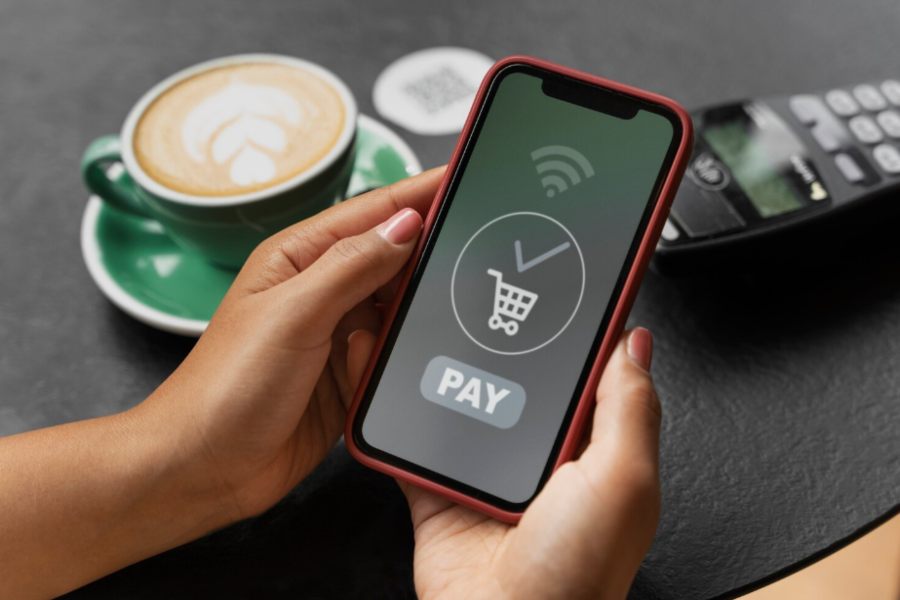
A credit or debit card payment moves through five separate institutions in under two seconds. It also happens to be one of the most fraud-exposed parts of modern commerce. According to the 2026 MRC Global eCommerce Payments and Fraud Report, online merchants lose an average of 3.2% of their total annual revenue strictly to payment fraud. Furthermore, 45% of surveyed merchants now rank real-time payment fraud as their single biggest looming threat. That shifting risk landscape says a lot about why understanding payment processing is a critical financial strategy for protecting revenue in 2026.
Most business owners treat payment processing as a background utility, something that “just works” until it doesn’t. But the mechanics behind every transaction directly affect revenue, customer trust, and how exposed a business is when fraud rates climb. Below is a breakdown of how it all fits together.
What Is Payment Processing?
Payment processing is the system that authorizes, verifies, and settles a transaction between a buyer and a seller. It sounds straightforward. In practice, it requires several institutions to communicate and agree within a window of time short enough that nobody at checkout notices a delay.
Three roles sit at the core of this system:
- Payment processor – routes transaction data between the merchant, the acquiring bank, and the card network.
- Acquirer (acquiring bank) – holds the merchant’s account and receives funds once a transaction clears.
- Issuer (issuing bank) – the customer’s own bank, responsible for approving or declining the charge.
Pro tip: a merchant account is not the same thing as a business checking account. It’s a specialized holding account that lets a company accept card payments before funds settle into its operating account.
Payment Processor vs. Credit Card Processor: What’s the Real Difference?
A payment processor handles the full transaction lifecycle, while a credit card processor only deals with card payments specifically. That distinction matters more than it sounds.
A full payment processor typically bundles in gateway functionality, support for digital wallets, bank transfers, and buy now, pay later options, plus merchant account management. A credit card processor sticks narrowly to authorizing and settling card transactions through the major networks. For a single-market business selling only via card, a credit card processor might be enough. The moment international sales or recurring billing enter the picture, a broader payment processor becomes the more practical choice.
How Payment Processing Works, Step by Step
Every card transaction follows the same sequence, whether it’s a $4 coffee or a $4,000 invoice. Gaining a clear picture of how payment processing works under the hood reveals that while each step takes a fraction of a second, each one is also a potential point of failure.
Authorization: The First Checkpoint
The customer enters card details, and that data gets encrypted almost instantly by the payment gateway before it ever reaches the merchant in raw form. From there, the encrypted information travels to the payment processor, which forwards an authorization request through the acquiring bank to the relevant card network – Visa, Mastercard, or another scheme.
The card network identifies the issuing bank and sends the request along for a final decision. The issuer checks three things: available funds, account standing, and fraud risk signals. The response – approved, declined, or flagged for extra verification – travels back through the same chain in one to three seconds.
Authentication: A Layer Built for Online Risk
Online transactions often require an extra authentication step beyond the standard authorization flow. Tools like 3D Secure prompt the customer to confirm their identity through a one-time code, a fingerprint scan, or a banking app notification.
This step matters for a practical reason: when used correctly, it shifts fraud liability away from the merchant and onto the card issuer. Given how much fraud burden has already moved toward merchants in recent years, that liability shift is not a minor technicality.
Clearing and Settlement: Where Money Actually Changes Hands
Approval doesn’t mean instant deposit. Approved transactions get grouped into batches and submitted to the card network during clearing, a process generally completed within one business day. Fees get calculated here too, and the details route to the correct banks on both ends.
Settlement follows clearing. The issuing bank releases funds to the acquirer after subtracting interchange fees, and the acquirer deposits the remainder into the merchant’s account – usually within one to two business days, though high-risk industries often wait longer.
Payment Methods That Influence Checkout Conversion
Offering the right mix of payment methods is one of the more direct ways to reduce cart abandonment. Preferences shift heavily by region and demographic, which is part of why a one-size-fits-all checkout rarely performs well.
- Cards remain the dominant global method, split between debit (drawing from a bank account) and credit (drawing from a credit line).
- Digital wallets like Apple Pay and Google Pay use tokenization, replacing the actual card number with a meaningless substitute for online purchases.
- Buy now, pay later services let customers split purchases into installments, usually following a soft credit check rather than a full credit pull.
- Bank transfers and redirects matter most in markets where local banking rails are trusted more than card networks.
Demand for faster, more flexible payment options keeps climbing too. A 2025 Federal Reserve Financial Services survey found that 78% of consumers chose faster payments as a preferred option, a trend especially strong among younger generations.
Why Payment Processing Is a Revenue Lever, Not Just Plumbing
Every declined transaction is lost revenue, and authorization rates vary by processor, market, and card type. Businesses that benchmark acceptance rates across providers often uncover money quietly slipping away – a single percentage point of improvement compounds fast at scale.
International payment processing adds another layer worth flagging separately. Cross-border sales bring currency conversion costs and local payment preferences into the mix, and ignoring either one tends to cap growth before it starts. Businesses expanding abroad usually need a processor built specifically to handle multi-currency settlement and regional payment rails, not a domestic-only setup stretched thin.
Fraud is the other side of this equation, and it’s getting heavier for merchants specifically. A 2026 Federal Reserve survey of risk professionals found that debit card fraud was the most reported type of fraud, with 75% of institutions seeing attempts and 56% experiencing losses from it. That pressure trickles directly down to checkout, where weak fraud tooling at the processor level translates into real losses.
Where the Fees Actually Come From
Processing fees aren’t one flat charge – they stack from several sources. Interchange fees go to the issuing bank and represent the largest chunk; assessment fees go to the card networks for infrastructure upkeep; and processor or gateway fees cover the technical routing layer itself.
Pricing models differ too. Blended pricing folds everything into a single flat rate, which is simple but often costlier for high-volume merchants. Interchange-plus pricing separates the actual card cost from the provider’s markup, usually saving money as transaction volume grows.
Choosing a Processor That Fits the Business
Price is the obvious first question, but it shouldn’t be the only one. Payment method coverage matters just as much – a processor that can’t support a customer’s preferred way to pay is quietly costing sales before checkout even loads. Fraud tooling, acquirer depth, and settlement speed round out the list of criteria that tend to get overlooked until something breaks.
Frequently Asked Questions
What is payment processing in simple terms?
It’s the system that verifies, authorizes, and settles a digital transaction between a buyer’s bank and a seller’s account, involving the merchant, processor, acquirer, card network, and issuer.
How long does payment processing take?
Authorization typically completes in one to three seconds, while settlement – when funds actually reach the merchant’s account – usually takes one to two business days.
What’s the difference between a payment processor and a payment gateway?
A gateway captures and encrypts payment data at checkout; a processor routes that data between banks and networks to get a transaction approved and settled.
Why does international payment processing cost more?
Cross-border transactions involve currency conversion, additional compliance requirements, and often higher interchange rates tied to foreign-issued cards.
Who is liable for fraud in card transactions?
Liability depends on authentication. When tools like 3D Secure are used correctly, fraud liability typically shifts from the merchant to the card issuer; otherwise, merchants increasingly absorb the loss.
Leave a Reply