


Managing one restaurant is challenging. Managing multiple franchise locations is far more complex because operators must coordinate sales, inventory, employees, accounting, training, customer service, compliance, marketing, and brand standards across many locations.
That is why many operators ask, ” What software do restaurant franchise groups use?
Most franchise groups do not depend on one application. Instead, they use a connected restaurant technology stack that may include POS software, inventory management, accounting, employee scheduling, franchise management, customer loyalty, online ordering, and reporting tools.
Compliance is another important part of multi-location management. Using restaurant compliance software can help teams organize food-safety tasks, training requirements, and operational checks more consistently.
The objective is simple: create consistent operations while giving owners, franchisees, and managers better visibility into each location.
Strong restaurant franchise management software can reduce manual work, standardize processes, improve reporting, control food and labor costs, and make it easier to scale into new locations.
What Types of Software Do Restaurant Franchise Groups Use?
Restaurant franchise groups usually use several connected software systems because each one handles a different part of the business.
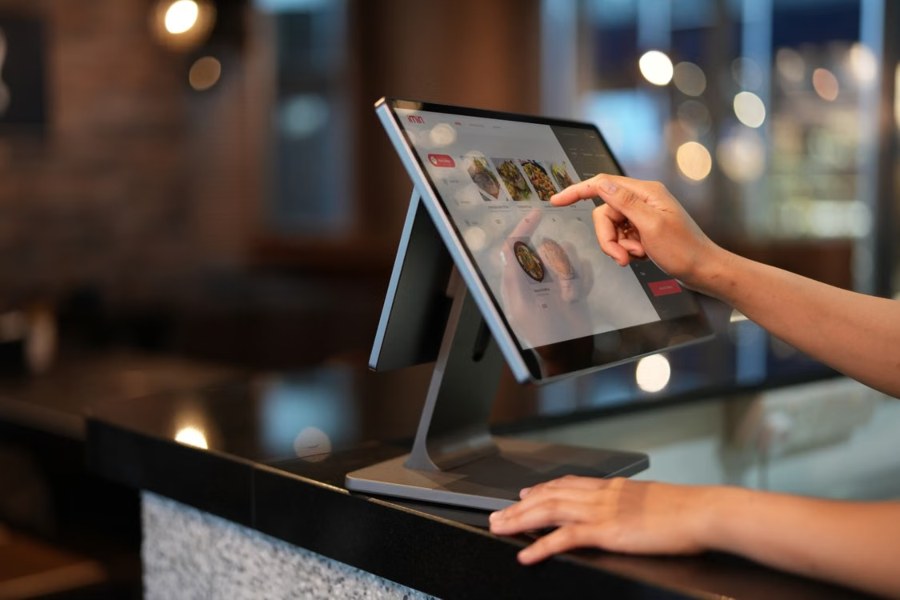
A multi-location POS system manages sales, menus, pricing, payments, discounts, and order routing. Centralized controls also make it easier to update multiple locations at once.
Restaurant accounting software helps track revenue, expenses, food costs, labor costs, cash flow, and profitability across different units.
Inventory management software monitors ingredients, stock levels, supplier purchases, recipe costs, and waste, helping restaurants control food costs.
Workforce management software supports employee scheduling, attendance, overtime, labor forecasting, and payroll control.
Franchise management software can handle franchisee onboarding, royalties, compliance, training, audits, new-location openings, and performance tracking.
Restaurant groups may also use online ordering, loyalty, CRM, mobile apps, and marketing automation tools to improve customer engagement.
So, what software do restaurant franchise groups use? Most rely on a mix of POS, accounting, inventory, workforce, franchise management, and customer engagement tools.
How Does Restaurant Franchise Software Improve Multi-Location Management?
Restaurant franchise software helps businesses replace disconnected processes with a more centralized operating structure.
Centralized Operations
Managing multiple restaurants becomes difficult when each location uses different systems.
Centralized software lets corporate teams monitor sales, inventory, staffing, compliance, and performance from a single platform. It also distributes updates to policies, procedures, menus, or operational requirements more efficiently.
Consistent Brand Standards
Customers expect a similar experience at every franchise location.
Restaurant franchise management software can help standardize training, recipes, checklists, operating procedures, marketing materials, and service expectations.
Consistency protects the brand and makes new locations easier to manage.
Improved Reporting
Franchise operators need more than sales totals.
They need to understand which locations are profitable, where food costs are increasing, which restaurants are exceeding labor targets, and where operational problems exist.
Centralized reporting can track metrics such as:
- Sales
- Food cost
- Labor cost
- Inventory variance
- Average order value
- Customer satisfaction
- Audit scores
- Franchise royalties
- Profitability
Better visibility allows leadership to react faster.
Easier Franchise Expansion
Growth creates operational pressure.
Every new restaurant requires training, systems, menus, staff, suppliers, technology, and reporting processes.
Franchise software can turn these activities into repeatable workflows, making expansion more manageable.
What Features Should Restaurant Franchise Management Software Have?
When evaluating restaurant franchise software, operators should focus on practical features that solve real business problems.
Important capabilities include:
- Multi-location POS management: Centralized menus, pricing, payments, discounts, and sales reporting.
- Inventory management: Ingredient tracking, waste control, recipe costing, and purchasing.
- Employee scheduling: Shift planning, availability, overtime, attendance, and labor forecasting.
- Accounting and finance: Profit-and-loss reporting, expenses, budgeting, accounts payable, and cash-flow visibility.
- Royalty management: Calculation and tracking of franchise royalty payments.
- Franchisee onboarding: Workflows for training, documentation, approvals, and new-location setup.
- Compliance tracking: Monitoring operational standards, food safety requirements, and required documentation.
- Audit management: Standardized evaluations across all locations.
- Learning management: Centralized employee and franchisee training.
- Marketing asset management: Approved menus, templates, campaign materials, and brand resources.
- Loyalty and CRM: Customer data, rewards, personalized offers, and retention campaigns.
- KPI dashboards: Real-time comparisons between restaurants, regions, and franchisees.
- Cloud access: Remote access to business information.
- Role-based permissions: Different access levels for corporate teams, franchisees, managers, and employees.
- Integrations: Connections with POS, payroll, accounting, ordering, delivery, and marketing systems.
The best system is not necessarily the platform with the longest feature list. It is the one that solves the franchise group’s most important operational problems.
Why Do Restaurant Franchises Need Inventory and Labor Software?
Food and labor are two of a restaurant’s biggest expenses.
Inventory software helps operators understand how much product should have been used compared with how much was actually used.
For example, if a restaurant sells a certain number of menu items, managers can estimate how many ingredients should have been consumed. If actual usage is much higher, the difference may indicate waste, incorrect portions, spoilage, theft, or counting errors.
Labor software solves a different problem.
Restaurants need enough employees to provide good service, but overstaffing reduces profitability. Workforce systems help managers match staffing levels with expected sales and customer demand.
The most effective restaurant franchise software connects sales, inventory, and labor information.
That gives management a more accurate view of restaurant profitability and makes it easier to control costs.
How Do Franchise Groups Use Software for Training and Compliance?
Franchise businesses depend heavily on consistency.
A restaurant brand cannot scale successfully if every location follows different operating standards.
Training software gives franchisees and employees access to approved learning materials, including videos, checklists, standard operating procedures, quizzes, and management courses.
Corporate teams can monitor completion and identify employees or locations that need additional training.
Compliance software helps track food safety procedures, internal standards, inspections, documentation, and corrective actions.
Audit tools also make evaluations more consistent.
Instead of each field manager using a different method, all locations can be scored using the same criteria, such as:
- Food quality
- Cleanliness
- Customer service
- Brand presentation
- Employee training
- Food safety
Standardized audits make it easier to compare restaurants and identify areas that need improvement.
How Should You Choose Restaurant Franchise Software?
If you are researching what software restaurant franchise groups use, avoid choosing a platform simply because a large brand uses it.
Your system should match your own operating model.
Identify Your Biggest Problems
Start with problems rather than features.
For example:
- Reporting takes too long.
- Food costs are difficult to control.
- Franchisee onboarding is inconsistent.
- Labor expenses are too high.
- Royalties require manual calculations.
- Corporate teams lack visibility.
Once these issues are clear, software comparison becomes easier.
Check Integrations
Restaurant technology works best when systems share data.
Your POS may need to connect with accounting, inventory, payroll, loyalty, online ordering, and reporting platforms.
Poor integrations can create duplicate work and inaccurate reporting.
Evaluate Ease of Use
Restaurant managers operate in fast-paced environments.
Software should simplify daily work, not add unnecessary steps.
Ask actual users to participate in software demonstrations before making a final decision.
Consider Scalability
A platform that works for ten restaurants may not work well for 100.
Evaluate whether the system can handle additional stores, users, transactions, franchisees, and reporting requirements as the business grows.
Calculate Total Cost
Look beyond the monthly subscription.
Consider implementation, training, hardware, data migration, integrations, support, payment processing, and add-on modules.
When Should a Restaurant Franchise Upgrade Its Software?
Restaurant groups should consider upgrading when technology starts slowing down operations.
Common warning signs include:
- Heavy dependence on spreadsheets.
- Too much manual data entry.
- Different locations using inconsistent processes.
- Slow or inaccurate reporting.
- Difficulty opening new locations.
- Too many separate software logins.
- Poor integration between platforms.
- Limited visibility into food and labor costs.
- Difficulty measuring franchisee performance.
If these problems become common, the existing technology stack may no longer support the franchise’s growth.
Conclusion: Choosing the Right Restaurant Franchise Software
So, what software do restaurant franchise groups use?
Most successful franchise organizations use a combination of POS, accounting, inventory, employee scheduling, payroll, franchise management, training, compliance, online ordering, loyalty, CRM, and reporting platforms.
The purpose of these systems is not simply to automate tasks.
Good restaurant franchise software helps corporate teams create consistent processes, monitor performance, control costs, support franchisees, improve customer experiences, and scale more efficiently.
The best technology stack should also reduce complexity.
Before investing in new software, evaluate your current systems, identify manual processes, define essential integrations, and decide which KPIs matter most.
When implemented correctly, restaurant franchise management software can strengthen connections among corporate leadership, franchisees, managers, employees, and customers while helping every location operate more efficiently.
FAQs About Restaurant Franchise Management Software
What software do restaurant franchise groups use?
Restaurant franchise groups typically use POS, accounting, inventory, scheduling, payroll, franchise management, training, loyalty, CRM, online ordering, compliance, and analytics software.
What is restaurant franchise management software?
It helps franchisors manage multiple restaurant locations, franchisees, compliance requirements, training, reporting, royalties, operational standards, and performance.
Why do restaurant franchises need centralized software?
Centralized software makes it easier to standardize processes, compare locations, monitor performance, distribute updates, and maintain consistent brand standards.
Can restaurant franchise software manage royalties?
Yes. Many franchise management systems can calculate, track, invoice, and report franchise royalty payments based on sales or other agreed terms.
What features should restaurant franchise software include?
Important features include multi-location reporting, POS integration, inventory control, employee scheduling, accounting, compliance tracking, audits, training, royalty management, KPI dashboards, and cloud access.
How does restaurant franchise software improve profitability?
It can improve profitability by helping operators reduce waste, control food and labor costs, automate repetitive tasks, identify underperforming locations, and make faster data-driven decisions.
1 Comment
How Small Teams Build a Reliable AI Video Creation Workflow Without a Studio
October 17, 2026[…] Below is the exact four-stage operating model we have seen hold up across web development shops, software onboarding teams, and regional marketing […]